

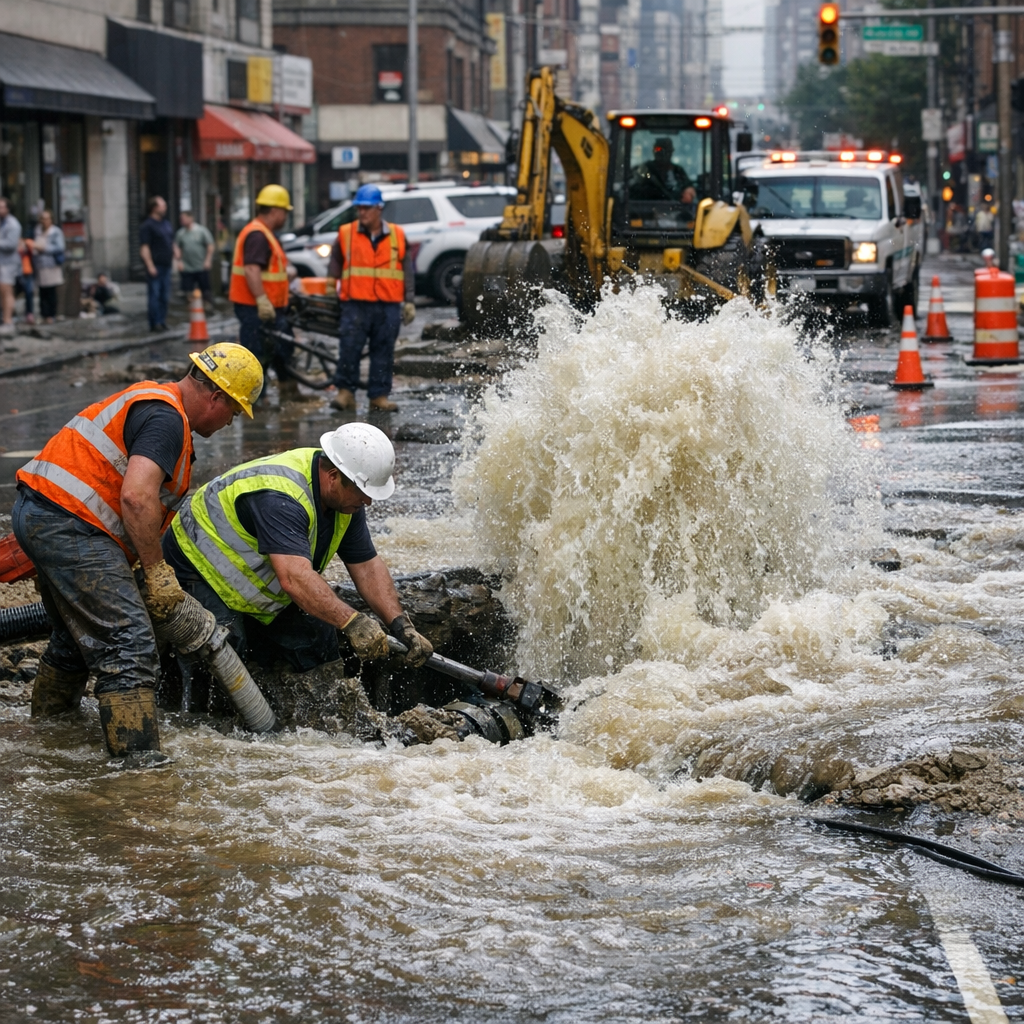
Waterbury, Connecticut, has recently faced significant infrastructure challenges, notably a major water main break that left thousands without water. This incident underscores a broader, global issue: the struggle to maintain and upgrade aging infrastructure systems.
Local Impact
In December 2025, a catastrophic failure of a high-pressure water line in Waterbury’s aging system resulted in widespread water service disruptions. Approximately 60% of the city was without water, affecting residents, businesses, and essential services. The break occurred when a 10-inch water line installed in 1901 failed, undermining a 42-inch transmission main that burst with explosive force. Repairs were complex and costly, with estimates exceeding $2 million. Mayor Paul Pernerewski emphasized the need for system upgrades to prevent future incidents.
Global Perspective
Waterbury’s experience is not unique. Cities worldwide are grappling with the challenges of aging infrastructure. In many urban areas, water systems, bridges, and roads built decades ago are now deteriorating, leading to service disruptions and safety concerns. The American Society of Civil Engineers has consistently graded the United States’ infrastructure poorly, highlighting the urgent need for investment and modernization.
Moving Forward
Addressing these challenges requires a multifaceted approach. Locally, Waterbury is seeking federal and state assistance to fund necessary upgrades. Globally, cities are exploring innovative solutions, such as smart technologies for monitoring infrastructure health and public-private partnerships to finance large-scale projects. The key lies in proactive maintenance, timely upgrades, and sustainable planning to ensure infrastructure systems can meet current and future demands.
As Waterbury continues to navigate these challenges, it serves as a microcosm of a global issue, reminding us of the critical importance of investing in and maintaining the infrastructure that underpins our daily lives.