

By Lucas Gonzalez
What Makes Waterbury Feel Like Home
Growing up here, I’ve seen firsthand how strong relationships can anchor someone in this city. Knowing your neighbors, being able to walk to the local corner store, seeing children at school events—all of these build belonging. According to a community health assessment, people in Waterbury say that good relations with neighbors and community leaders are among the strongest ties that help them feel connected.
Public spaces like parks, local libraries, streets with stoops, and neighborhood institutions—all of these matter. When schools pull parents together, or when volunteer cleanup days happen, we get more than clean streets. We build trust and shared identity. For many residents, school events are one of the few times you meet people outside your immediate circle.
What Breaks Bonds and Frustrates People
But connection is fragile. Feelings of being shut out—whether due to disability, lack of access to information, or a mistrust of city government—leave too many people isolated.
Safety is a big concern. Some neighborhoods carry a reputation for crime that discourages others from visiting, even when many people say those reputations are exaggerated. Still, the fear—for children walking to school, for owners of small businesses, for families trying to feel safe in their homes—lingers deeply.
Neglected infrastructure—broken sidewalks, unlit streets, rundown buses and trails—reinforces a sense of being forgotten. When sidewalks are uneven or overgrown, when communications about free programs go mainly by email, people without reliable internet or mobility face real barriers.
Small Shifts, Big Changes
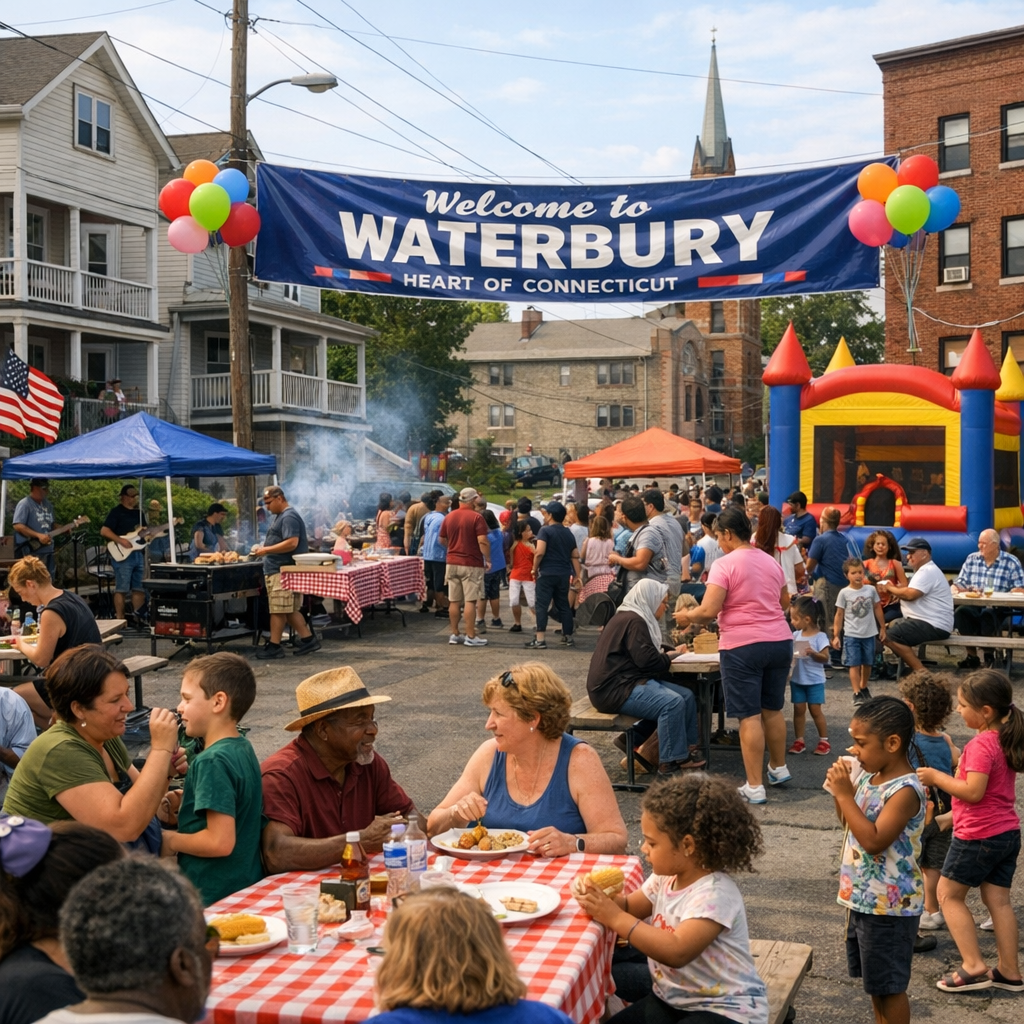
There are things we can all do to make things better. Start at the neighborhood level: invite someone you’ve never spoken to before to coffee, help with a small clean-up, attend a local PTA meeting or block party. These are low-lift but high-value ways to bridge divides.
City officials can and should improve access—better lighting, safe sidewalks, reliable public transit, and more transparent communication channels. Also, programs that bring different neighborhoods together—like arts festivals, sports leagues, shared community gardens—build both pride and understanding.
A Role for Everyone
To the long-time Waterburians: share your stories. To the newcomers: lean in and ask questions. To parents, faith leaders, educators, shopkeepers—use whatever platform you have to connect people and make them feel seen. To our officials: listen more and walk your neighborhoods.
Because Waterbury is full of people who care. It’s full of history, challenges, triumphs. And though the gaps are real, so are the possibilities. We don’t need perfection to build connection—we just need each other.